WEMAIDE / INSIGHTS / BUILD NOTES
Our Mascots Look Like They Need Help. That’s the Point.
How a hyperactive greyhound and a deeply unimpressed sphynx became the two personalities behind WeMAIde.
We had one rule for the WeMAIde mascot: please don’t make it cute. The internet already has enough round heads, perfect smiles and tiny hoodies designed by committee. Pleasant. Polished. Immediately forgettable. We wanted a character with a pulse. Preferably an irregular one.
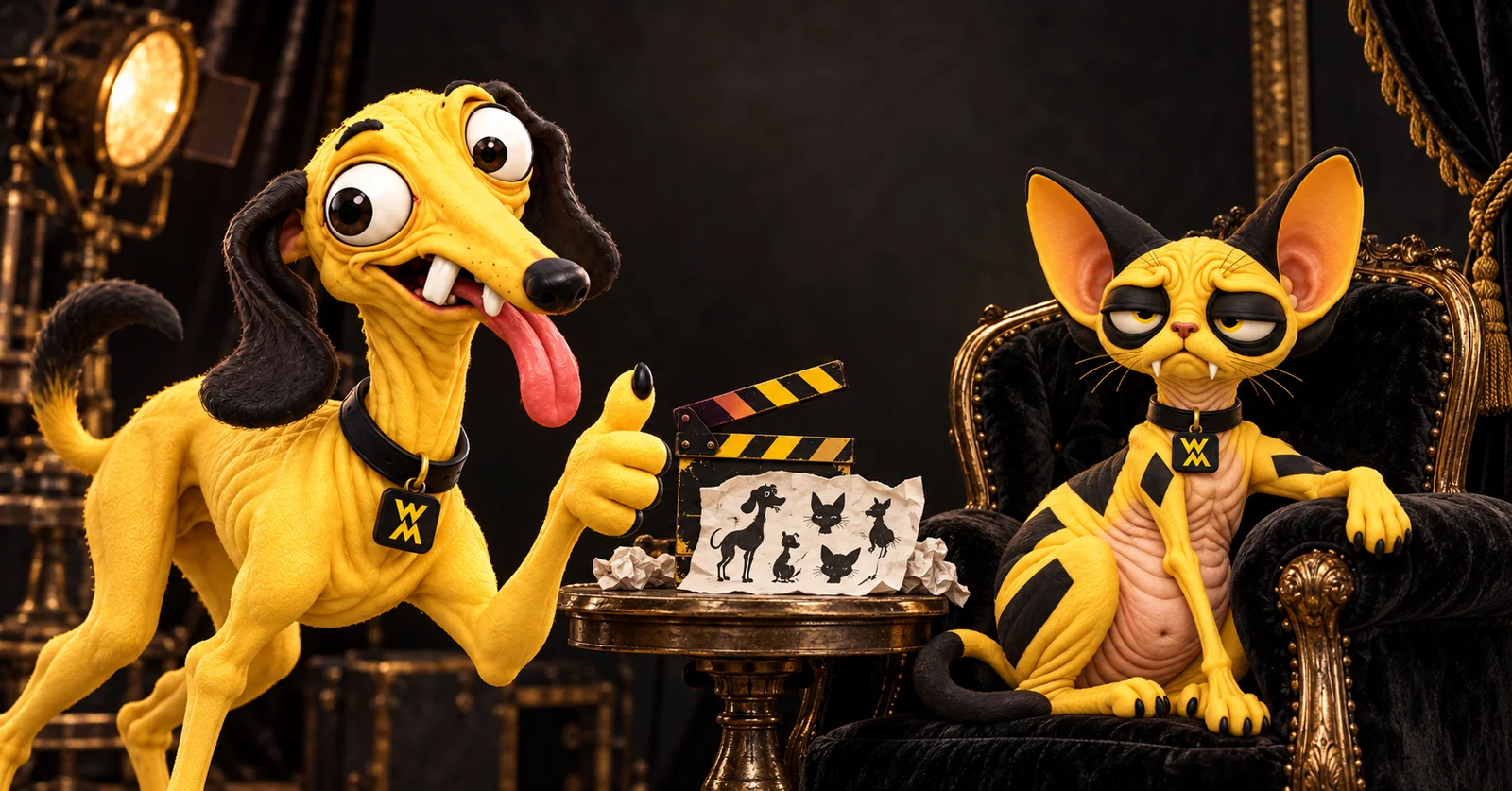
Meet Wemi: the two yellow-and-black mascots of WeMAIde, our independent studio building AI software, apps, Telegram products and automation systems. One is a greyhound with far too much enthusiasm. The other is a sphynx cat that has already read your proposal and would like several things explained. Together, they put a face—or two slightly questionable faces—to the way we work.
The brief: make it disgustingly cute
The first concepts had a familiar problem. They were adorable. Soft, friendly, symmetrical. Completely house-trained. You could put them on a presentation slide and nobody would object. Unfortunately, nobody would remember them either.
So the brief changed: make it disgustingly cute. Not ugly for shock value. We wanted the strange little gap between “What happened to this creature?” and “I would protect it with my life.” That is where Wemi started to appear.
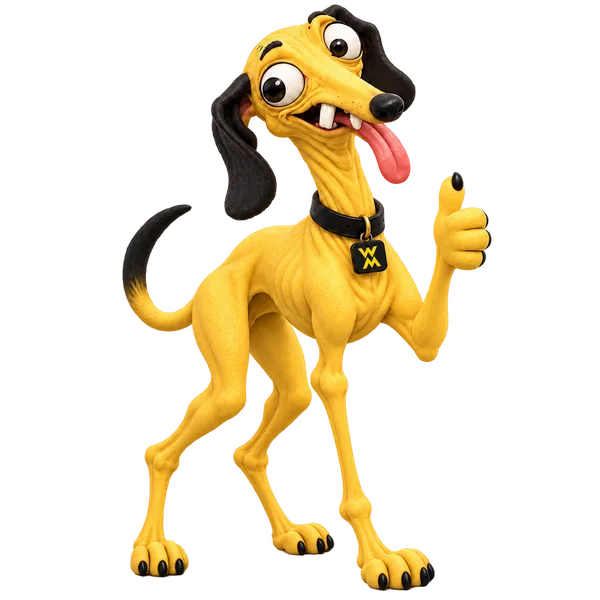
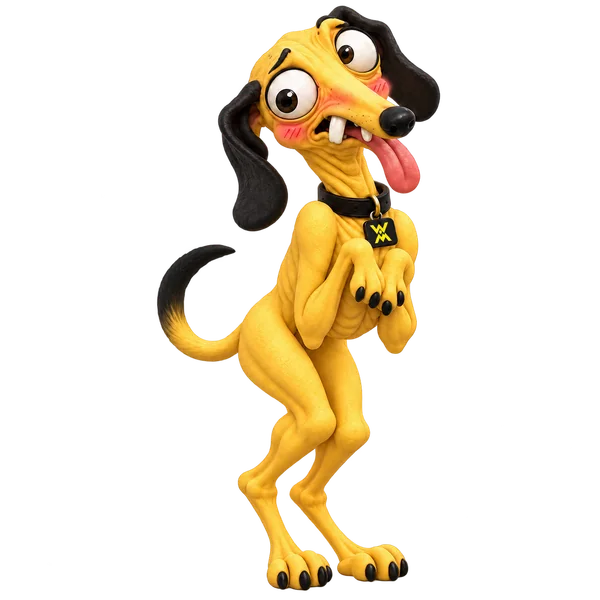
First came the greyhound: long legs, enormous eyes, an escaped tongue and an exceptionally committed tooth. The earliest version went a little too far. It looked less like a mascot and more like it needed a veterinarian, a warm blanket and a serious conversation about its working conditions. So we fed it. Figuratively. More weight, the same awkward proportions, all the enthusiasm.
Then we fixed the paws. Then we fixed them again. Character design is partly imagination and partly asking why a thumb is growing from the wrong side of a leg.
Meet the two departments
The greyhound: launch energy, no visible brakes
The greyhound is the part of us that wants to build the weird idea before someone schedules a meeting about whether it deserves a meeting. Big eyes. Bigger confidence. No visible risk assessment.
It will press the button, ship the update, celebrate the result and only then ask what the button did. Its tongue lives outside its mouth. Its tooth has more screen presence than most startup founders. Every enthusiastic gesture looks one frame away from becoming a support ticket.
But that energy matters. An idea cannot become a product if it never gets permission to be a slightly embarrassing first version. The greyhound is curiosity with legs: prototype it, test it, find out. If a sentence begins with “This may be stupid, but…”, it is already wearing a party hat.
The sphynx: your prompt has been reviewed
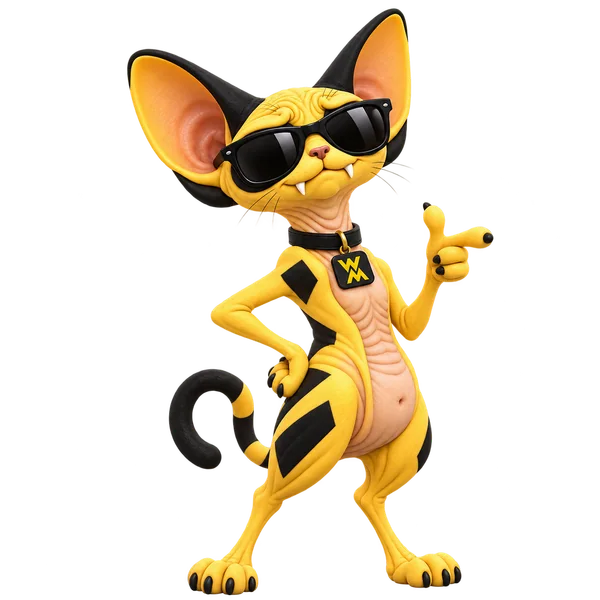
One unstable yellow creature was apparently not enough. The second Wemi became a sphynx cat: bald, wrinkled, suspiciously thin everywhere except for a gloriously loose belly, with sharp fangs and the expression of someone who has identified seventeen avoidable decisions in your workflow.
The cat does not chase approval. The cat has seen your prompt. The cat has concerns.
Where the dog is momentum, the sphynx is judgment. Should this automation exist? What happens when the API fails? Why has the “temporary workaround” been in production for eight months? It is not against experimentation. It would simply prefer the experiment not to email the entire customer database at 3 a.m.
The dog says, “Let’s ship it.” The cat says, “Show me the logs.” The dog is the demo. The cat is the edge case.
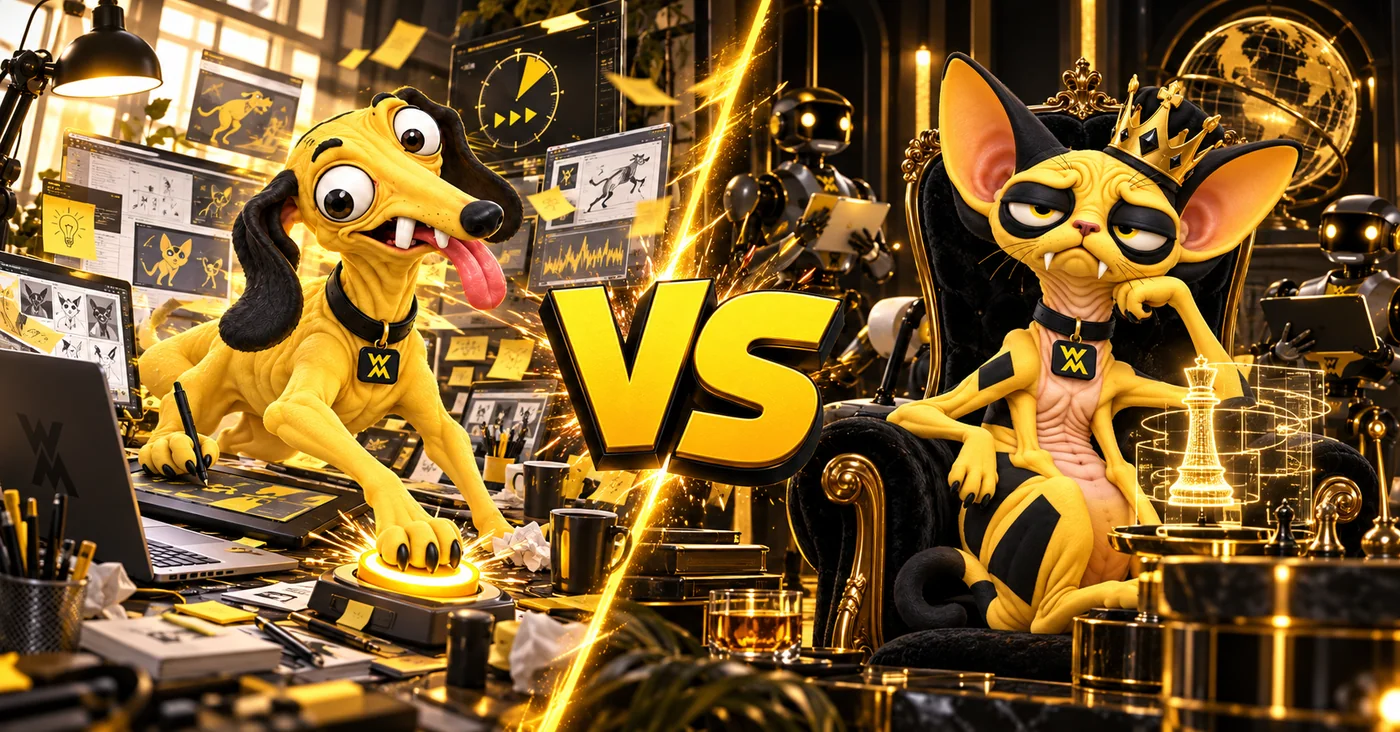
Why two mascots? Because the work needs both
Building with AI takes curiosity and suspicion. Speed and restraint. The willingness to try something absurd, plus the discipline to stop it becoming an expensive absurdity. A single endlessly cheerful mascot would tell only half that story.
The greyhound gives ideas permission to exist. The sphynx makes them earn the right to stay. That contrast feels familiar when we work on ThreadsFlow, Content Operator or a custom product: an experiment gets a chance, then its assumptions, permissions and failure cases get examined. The characters exaggerate the rhythm. The rhythm itself is real.
Wemi is not a promise that our software behaves chaotically. The mascots are allowed to be ridiculous so the work does not have to be. A funny face is not a substitute for a controlled workflow. The cat would never let us get away with that.
The details we refused to tidy away
The tooth matters. The escaped tongue matters. The belly folds matter. So does the stare that says your explanation has made the situation worse. Remove those imperfections and you do not get a cleaner Wemi. You get another yellow animal from the corporate mascot warehouse.
Keeping a character recognizable across poses turned out to be more demanding than making one good portrait. Change the expression, not the identity. Keep the proportions, yellow-and-black palette and familiar features. Make the gesture readable. And check the paws. Always check the paws.
The useful test was not “Does this look polished?” It was “Would we recognize this creature without its name underneath?” A logo tells people who made something. A character can tell them how it feels.
From a portrait to “please approve this”
Once the personalities were clear, sitting politely in a brand folder was no longer an option. Wemi needed a vocabulary. The greyhound learned to wave, beg, kiss, celebrate and deliver a thumbs-up with its entire body. The sphynx got sunglasses, finger guns, rage, boredom and a party hat that did not erase its underlying reservations.
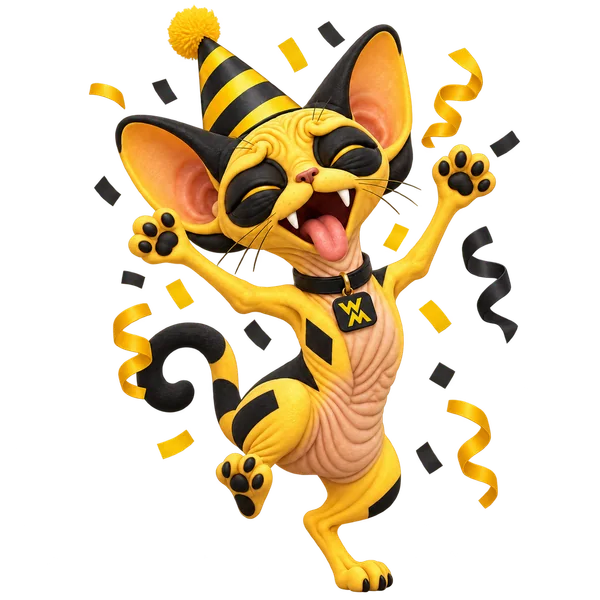
Reaction stickers are where a mascot stops decorating a brand and starts participating in a conversation. “Approved” is a status. A greyhound throwing every limb into a thumbs-up is a colleague who may have misunderstood the assignment but believes in you completely. We also started exploring short animation loops: tiny movements that keep the expression alive without turning every message into a feature film.
That is the direction we want to keep developing: stickers, small animations, product moments and more Wemi stories. The characters should have a reason to appear, not be pasted onto every empty corner. A reaction should add something. Otherwise, it is just a watermark with a belly.
So, which one is Wemi?
Both. Wemi is our small yellow-and-black ecosystem. One creature runs toward the idea with its tongue out. The other sits beside it, quietly calculating the blast radius. One makes the work exciting. The other keeps it honest.
Most mascots are designed to be liked. Wemi was designed to be recognized. Liking happened later.
Now be honest: in a product meeting, are you the greyhound or the cat?
This is Wemi’s home in the WeMAIde Insights Library. As the characters grow, we can add new reactions, animation experiments and the stories behind them here. If you met them in a post somewhere else, welcome. There is a whole studio behind the questionable paws.