 Start a project ↗
WEMAIDE / KNOWLEDGE ARCHIVE
Insights Library
Articles and practical materials about our products, development decisions, AI software and the systems we build.
Telegram bot payments: from an invoice to the right customer access
Plan Telegram bot payments for digital or physical goods. Follow a synthetic Stars order through pre-checkout, confirmed payment, access, recovery and refunds.
Open material ↗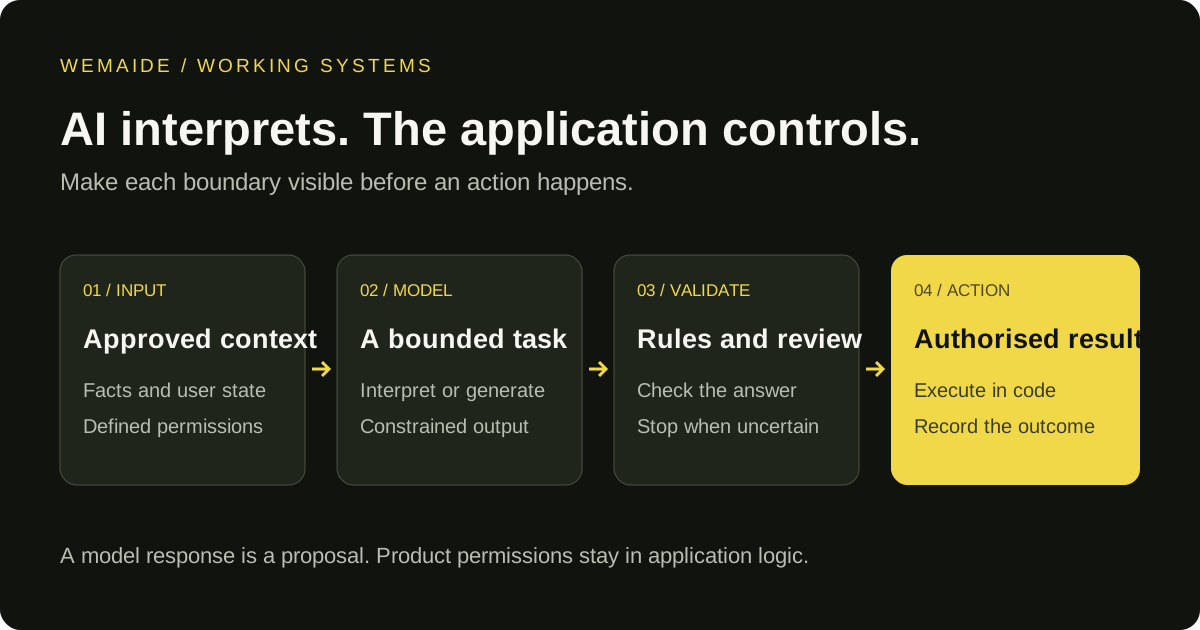
Structured outputs vs JSON mode: from valid JSON to valid application data
Compare JSON mode, schema-constrained output and tool calling. Run an offline invoice example that separates parsing, shape checks and business validation.
Open material ↗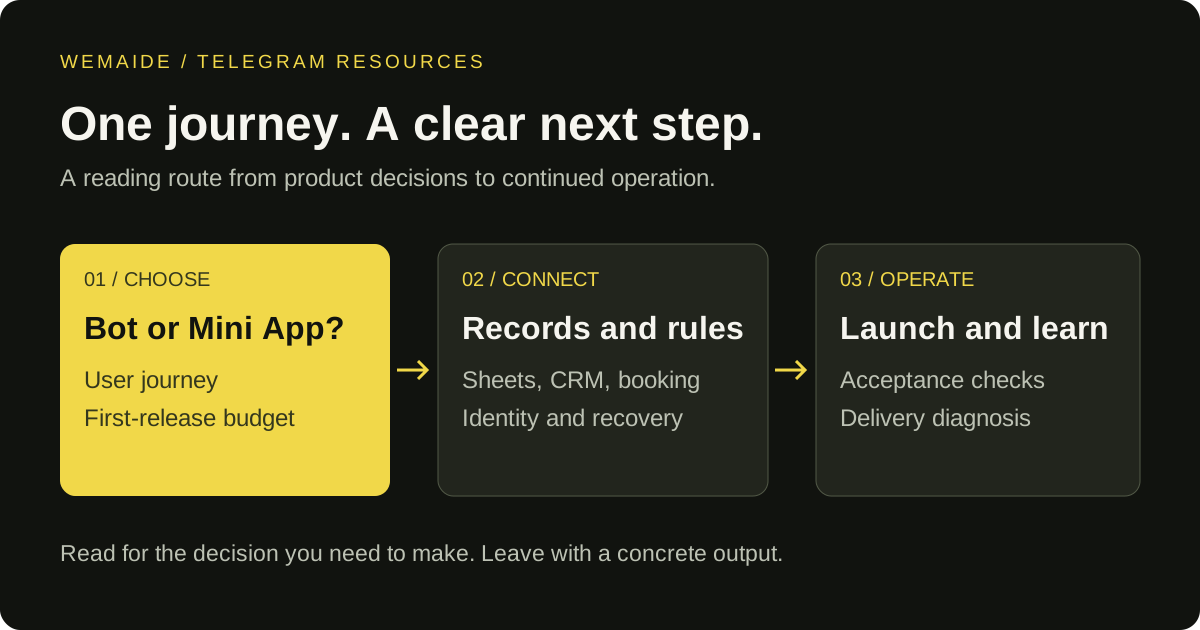
Telegram Mini App authentication: validate initData, then create your application session
Follow Telegram Mini App initData from client to backend. Includes an offline Node.js HMAC example, freshness checks, tampered-data tests and session boundaries.
Open material ↗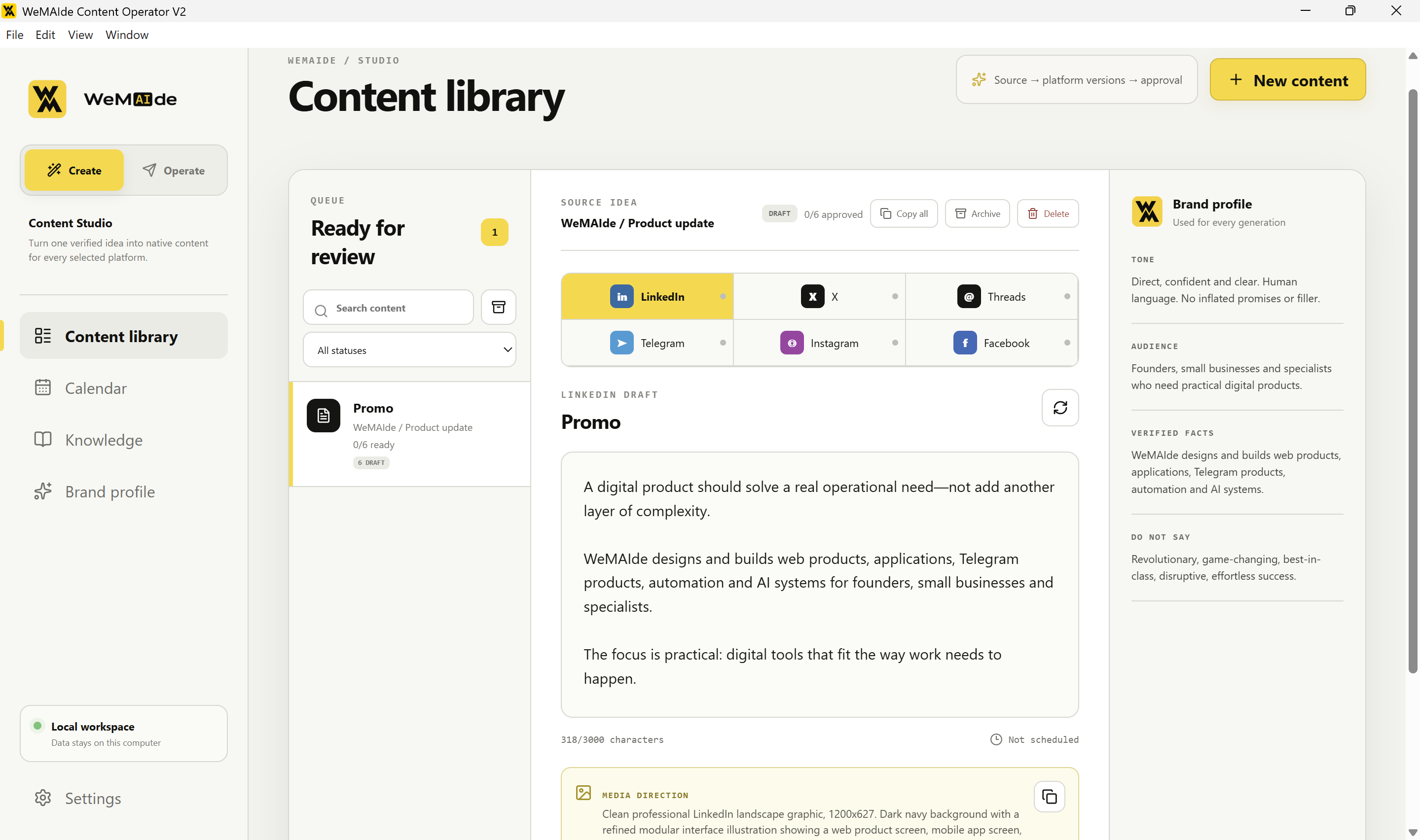
Building Content Operator: knowledge, draft states and the publishing boundary
An engineering account of Content Operator v2: local knowledge, platform drafts, edit and review states, explicit publishing and the limits of the current beta.
Open material ↗AI document processing: turn extracted fields into a reviewable workflow
Plan an AI document-processing workflow with source evidence, field validation, human review and controlled export. Includes a synthetic invoice example and review checklist.
Open material ↗Telegram booking bot: availability, confirmation and recovery
Plan a Telegram appointment bot that distinguishes requests from confirmed bookings, controls slot conflicts and recovers calendar and notification failures.
Open material ↗Telegram development resources: from product choice to operation
Choose a Telegram bot or Mini App, budget the first useful release, plan integrations and prepare launch checks. A guided route through WeMAIde's practical resources.
Open material ↗Telegram bot not sending messages? Trace the failure before restarting it
Diagnose Telegram Bot API failures by separating incoming updates, application processing, outgoing requests and delivery. Includes a safe troubleshooting record.
Open material ↗Telegram bot Google Sheets integration: capture requests without blind retries
Plan a Telegram-to-Google-Sheets workflow with confirmed submissions, stable identifiers, controlled append retries and separate notification states.
Open material ↗n8n HTTP Request, Code node, custom node or separate service?
Choose where integration logic belongs in n8n. Compare HTTP Request, Code and custom nodes with a separate service using one concrete API workflow.
Open material ↗How to integrate AI into existing software: scope one useful feature
Plan an AI feature for your existing software: define the task, connect approved data, validate outputs and test the complete workflow before release.
Open material ↗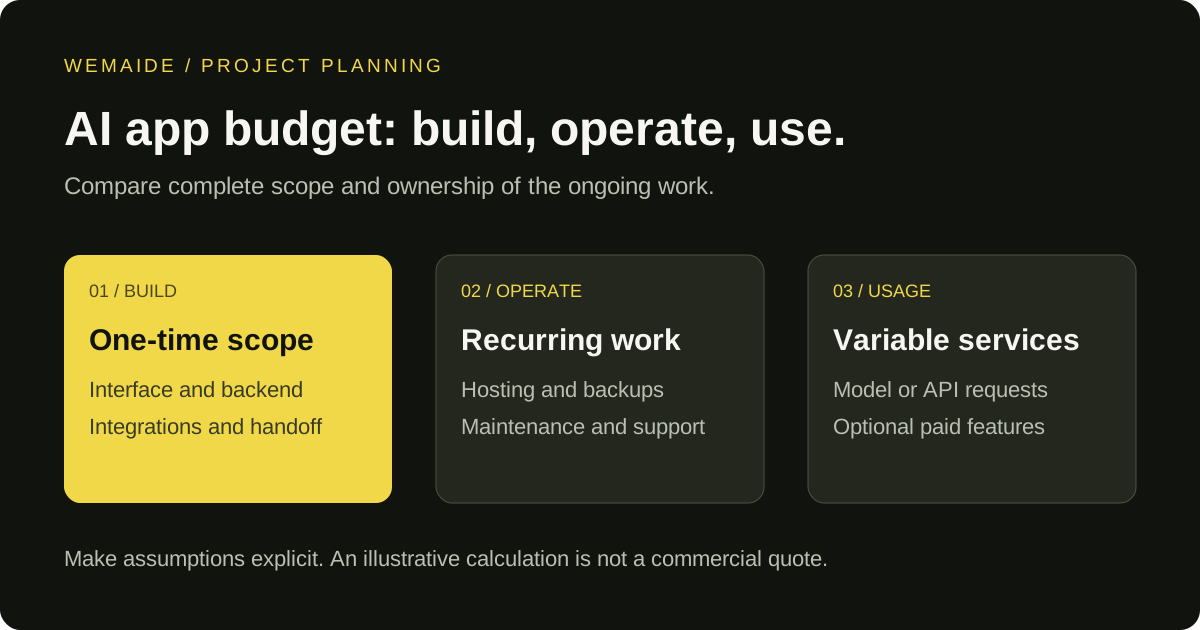
AI app development cost: budget the feature, the product and its operation
Estimate an AI application's build and running costs: scope, integrations, testing, model usage, maintenance and a transparent worked token-cost example.
Open material ↗Telegram bot CRM integration: capture leads and keep updates traceable
Plan Telegram bot CRM integration for lead capture and status updates: map identities, prevent duplicate writes, handle failures and define operator access.
Open material ↗
Our Mascots Look Like They Need Help. That’s the Point.
How a hyperactive greyhound and a deeply unimpressed sphynx became the two personalities behind WeMAIde.
Open material ↗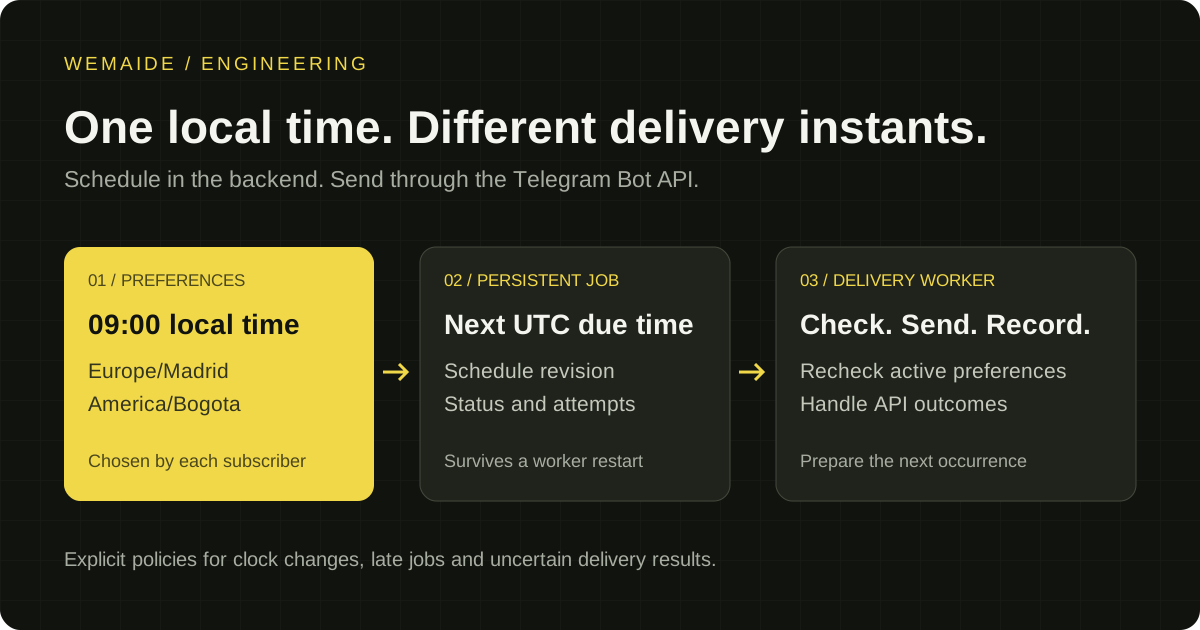
How to schedule Telegram bot messages in each user’s time zone
Design recurring Telegram bot messages with user time zones, daylight saving rules, persistent jobs, retries and restart recovery. Includes a worked example.
Open material ↗AI automation examples: three working systems and where the rules stay in code
See how WeMAIde combines AI with repeatable workflows in ThreadsFlow, Content Operator and Horoscope, plus a data-export example that does not need AI.
Open material ↗Telegram bot development cost: build a budget for development and operation
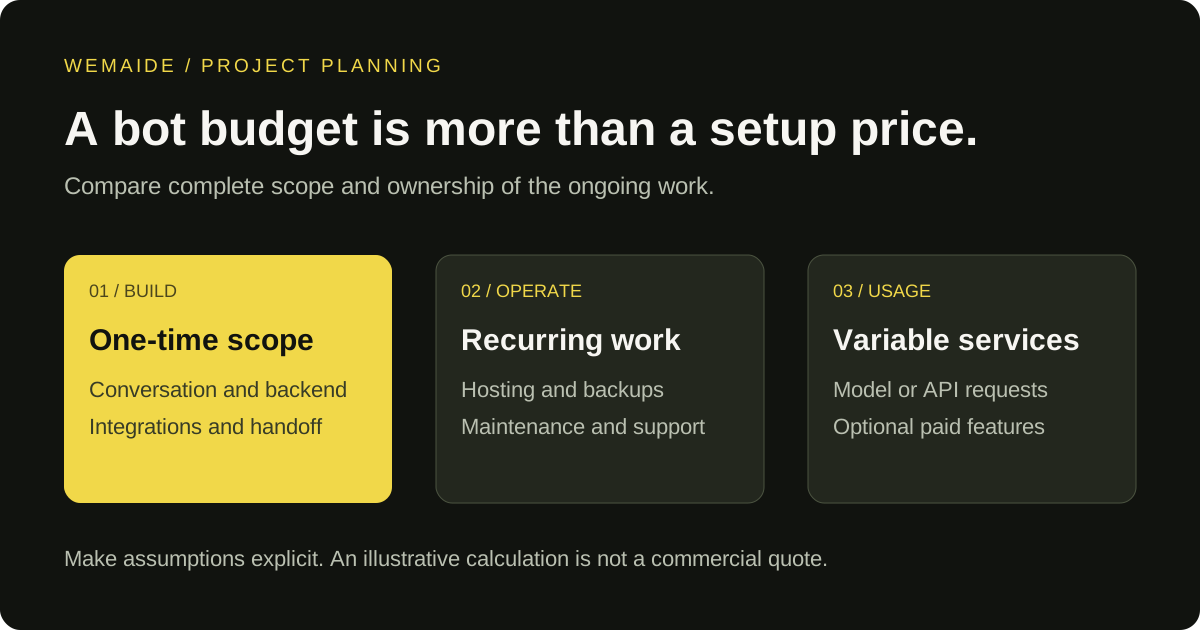
Estimate Telegram bot development and monthly operation with an adjustable calculator. Separate build scope, hosting, maintenance and AI usage.
Open material ↗Telegram bot AI integration: connect a model without handing it the product rules
A practical architecture for AI in a Telegram bot: approved context, bounded model tasks, validated responses, stored state and recovery, illustrated by Leela and Horoscope.
Open material ↗
Building trust into vehicle valuation: what WM AVTO taught us about incomplete data
A practical product case about identity, data normalization, relevant comparables, confidence ranges and explainable vehicle reports.
Open material ↗
How a local AI video editor turns raw footage into an editable first cut
Inside a practical AI video editing workflow for Windows and macOS: local transcription, structured direction, editable timelines, subtitles and on-device export.
Open material ↗
How much does it cost to build a Telegram Mini App in 2026?
Realistic planning ranges, cost drivers and scope decisions for turning a Telegram Mini App idea into a production product.
Open material ↗
AI agent vs workflow automation: what should a business build first?
A practical decision framework for choosing deterministic automation, an AI agent or a controlled hybrid system.
Open material ↗
Human approval in AI automation: where should the system stop?
A practical architecture for placing human approval at consequential AI decisions without turning every workflow into a queue.
Open material ↗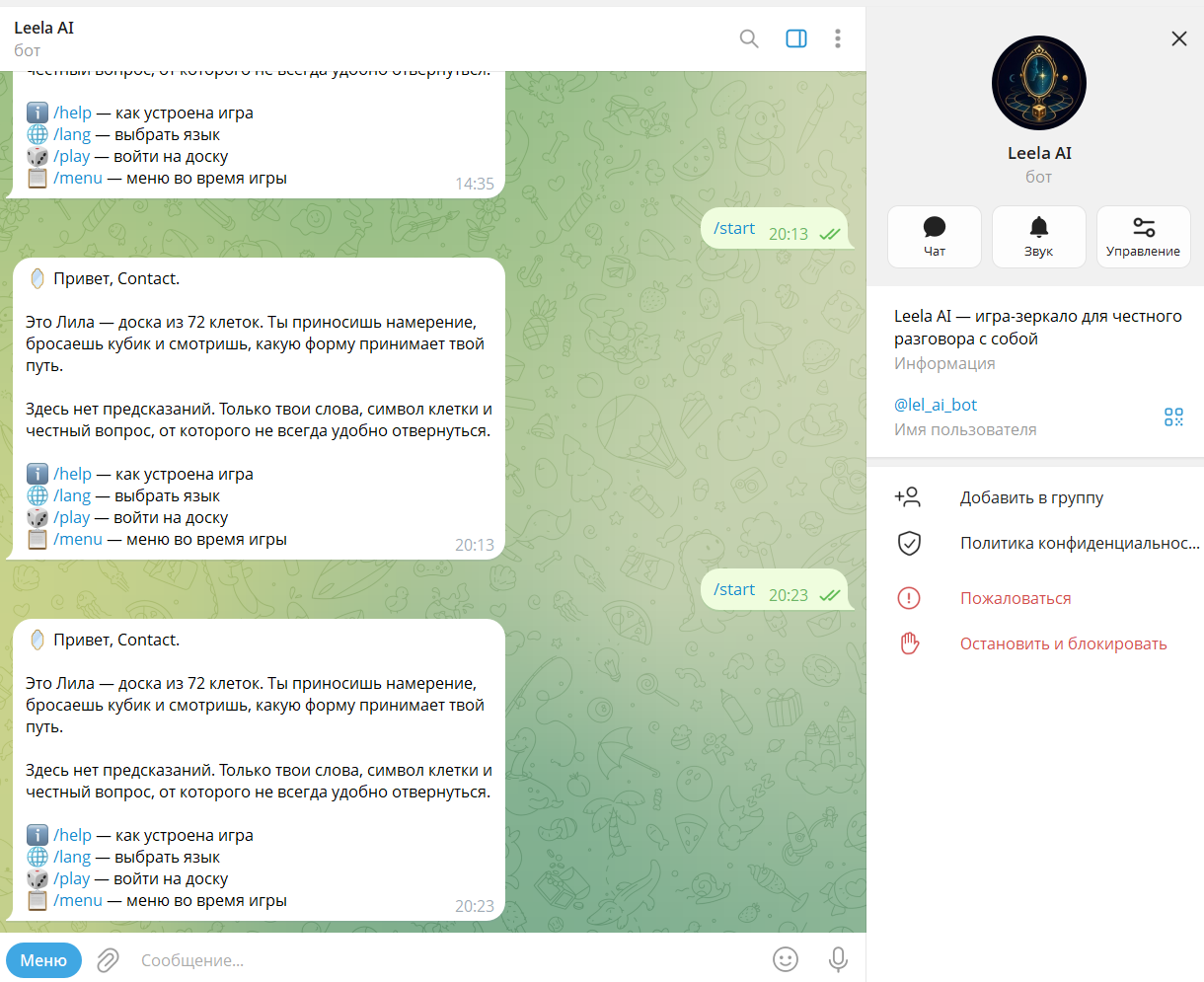
Telegram Mini App development: from idea to a product people can use
A practical guide to planning, building and launching a Telegram Mini App without treating it as a smaller website.
Open material ↗
Telegram bot vs Mini App: which should your product use?
A decision framework for choosing conversation, interface—or a deliberate combination of both—for a Telegram product.
Open material ↗
Custom AI software vs off-the-shelf tools: when should you build?
A practical build-versus-buy framework for teams considering a custom AI application, workflow or internal system.
Open material ↗
iOS and Android app development: one product, two native expectations
How to plan a shared mobile product without forcing identical screens, behaviour and release constraints onto iOS and Android.
Open material ↗AI content automation: one idea, six platform drafts and a controlled workflow
How selected brand knowledge becomes platform-specific drafts, review states and explicit publishing actions, illustrated by Content Operator.
Open material ↗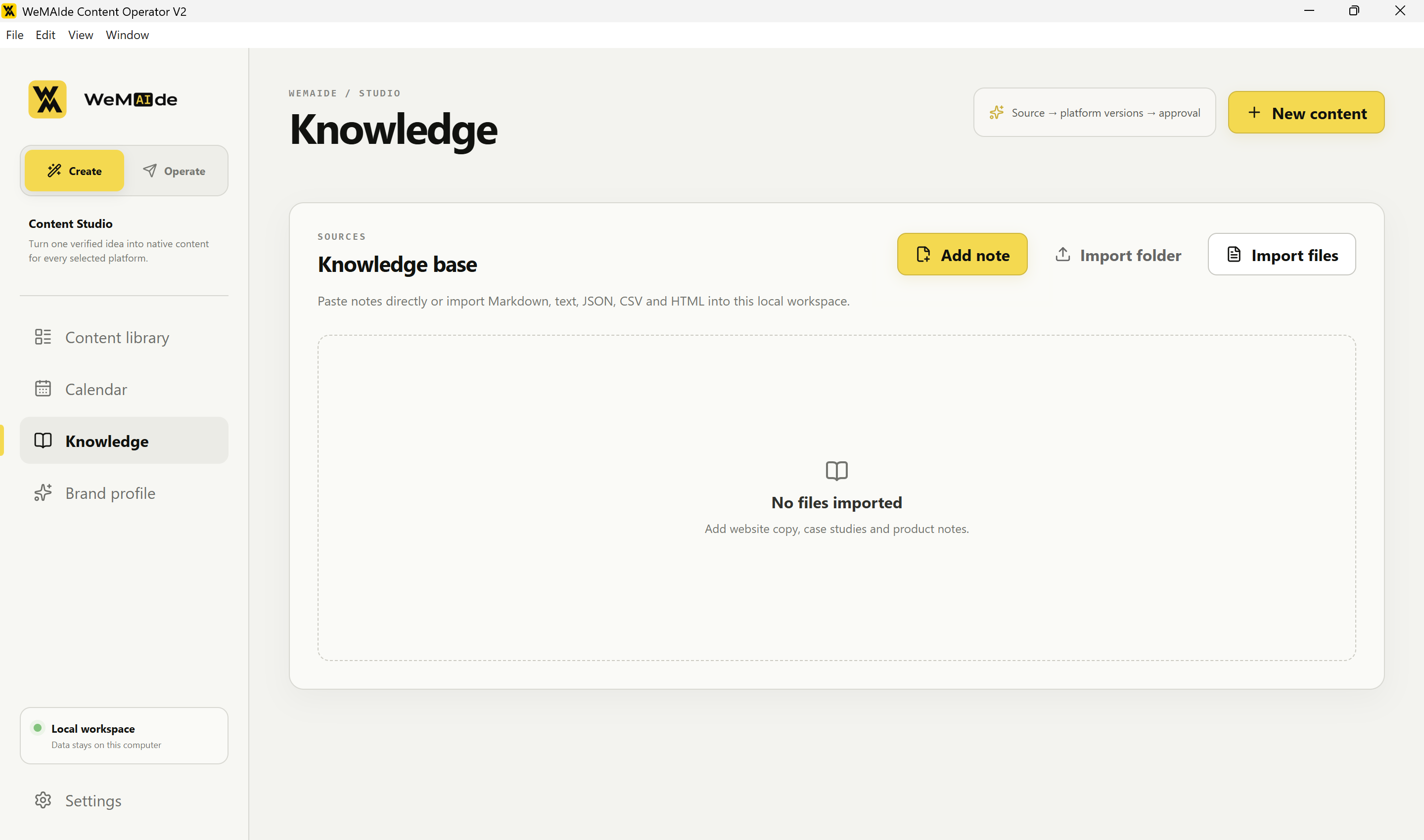
Why AI content tools should be local-first
A practical architecture for keeping knowledge, drafts and credentials under the user’s control without pretending the internet disappears.
Open material ↗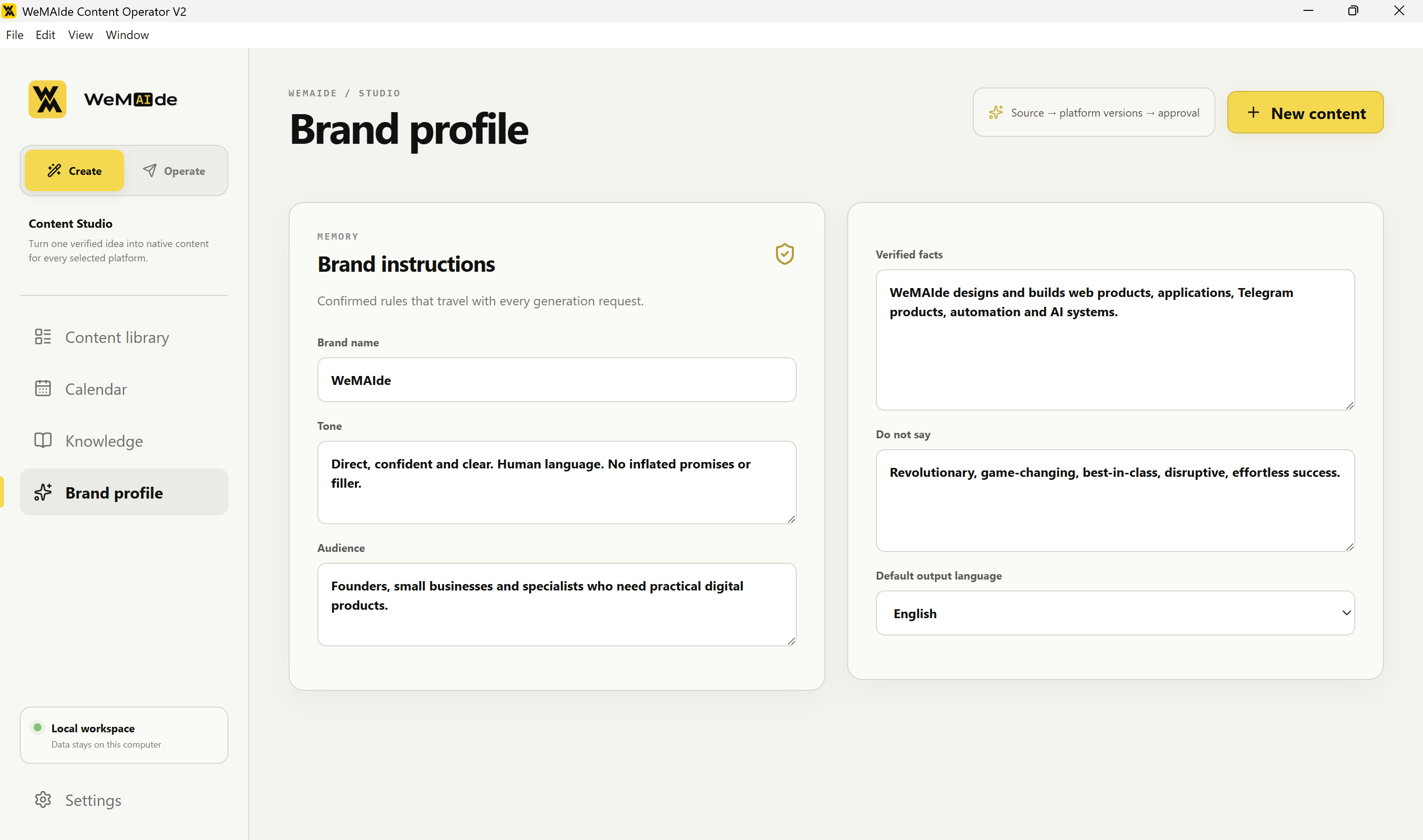
AI content does not need more prompts. It needs a source of truth.
What building Content Operator taught us about evidence, version states and reliable AI-assisted publishing.
Open material ↗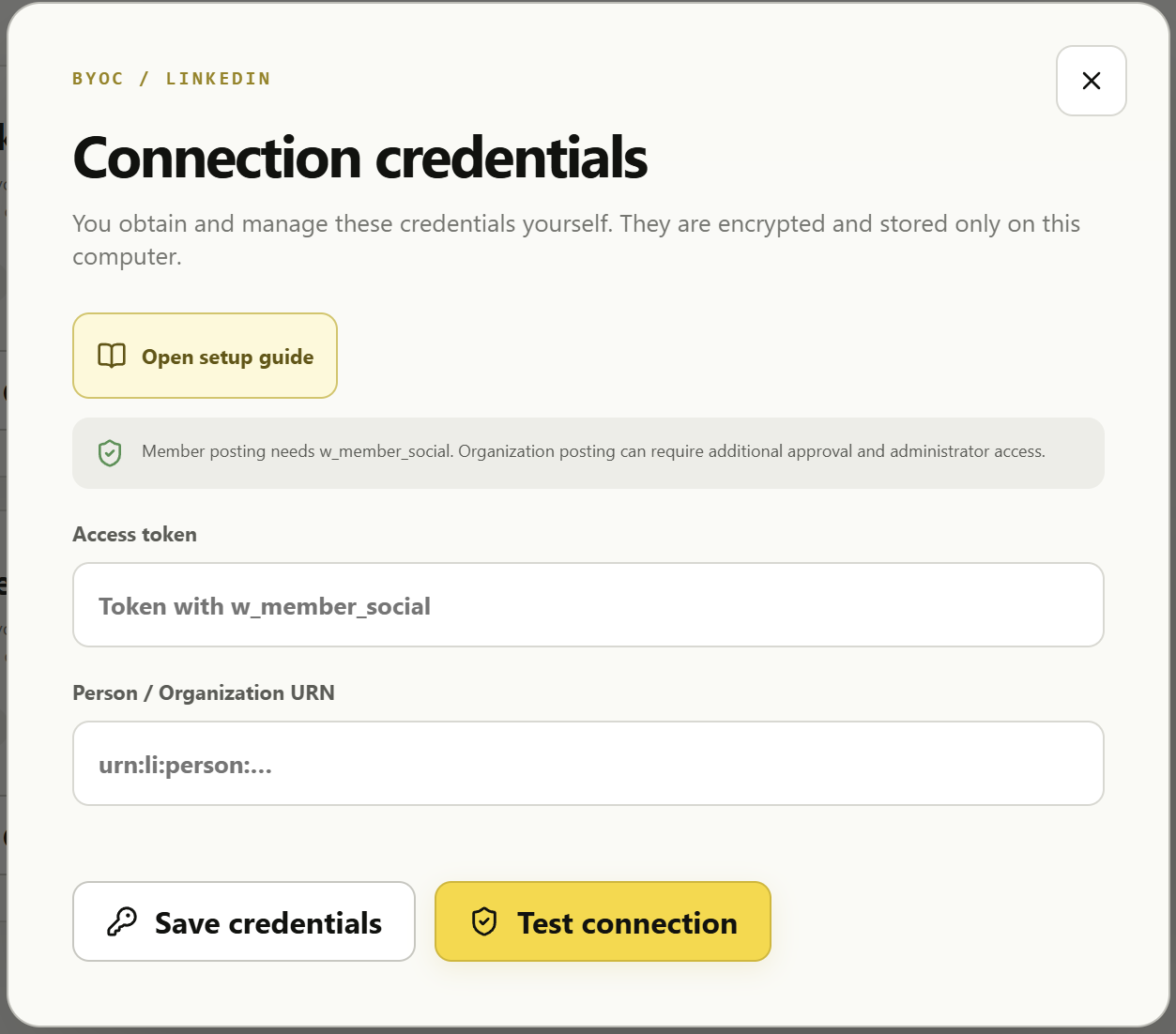
Your API keys should not need to trust us
Why Content Operator uses local, bring-your-own credentials—even though that makes onboarding less magical.
Open material ↗
Designing a decision layer for AI content automation
A reference architecture for separating signals, deterministic scoring, contextual AI, human approval and official publishing APIs.
Open material ↗HAVE A PRODUCT NEED?
Use the insight.
Then build the thing.
Tell us what needs to work. We will come back with the clearest next step.
Discuss it in Telegram ↗