AI content does not need more prompts. It needs a source of truth.
What building Content Operator taught us about evidence, version states and reliable AI-assisted publishing.
The easiest part of AI-assisted content is generating text. The difficult part begins one minute later: Is the product information accurate? Did the model invent a capability? Which version was approved? Does the LinkedIn post still agree with Telegram after both were edited?
When a team publishes occasionally, these questions can live in a document and a chat. When content becomes an operation, that approach starts to break. The problem is not a lack of prompts. It is a lack of controlled context.
Speed multiplies what is already in the system
If the source information is clear, acceleration produces more useful work. If the source is vague, outdated or mixed with assumptions, acceleration produces uncertainty at scale. Fluent text can hide weak evidence extremely well.
Which information is the model actually allowed to treat as true?
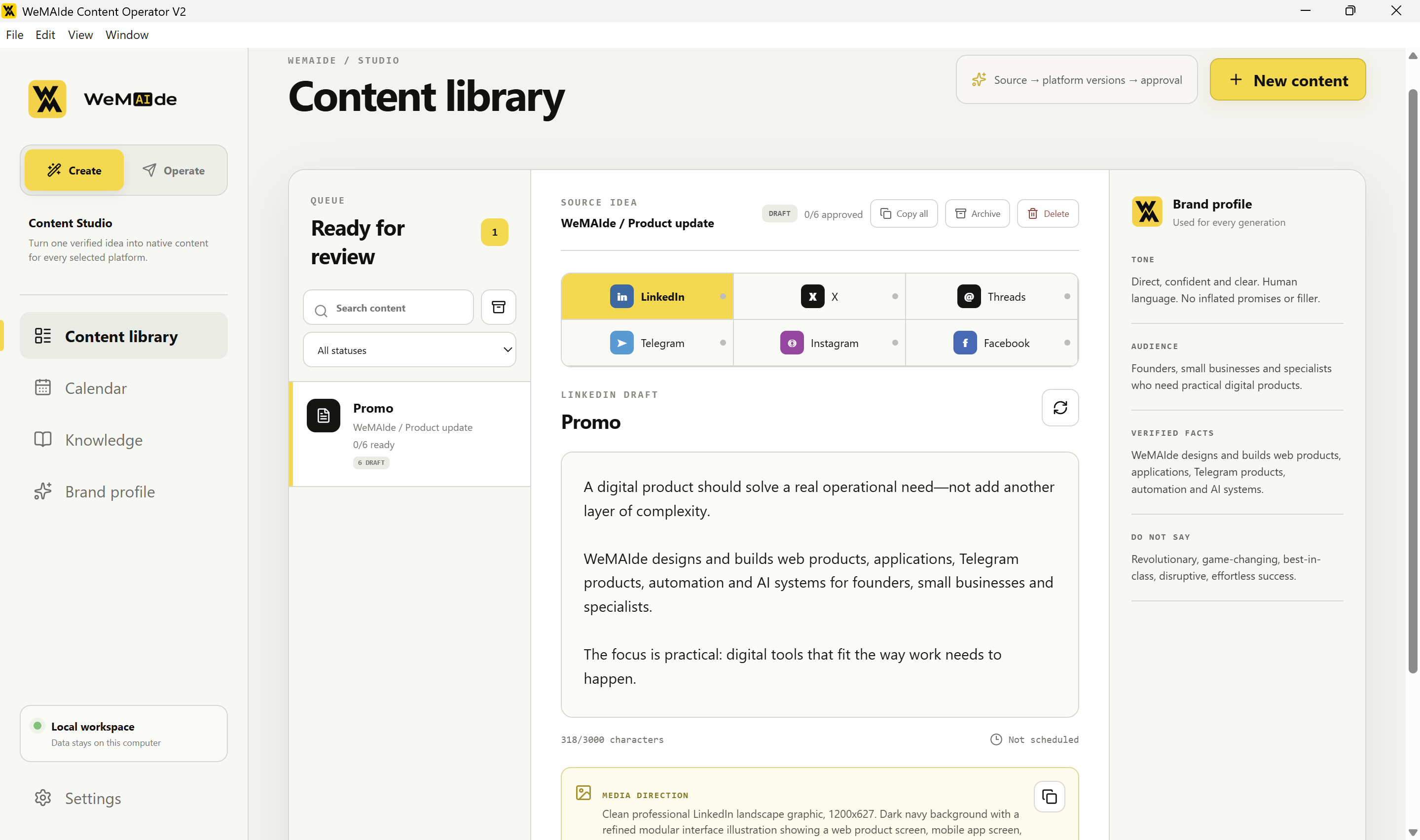
Separate identity, evidence and instructions
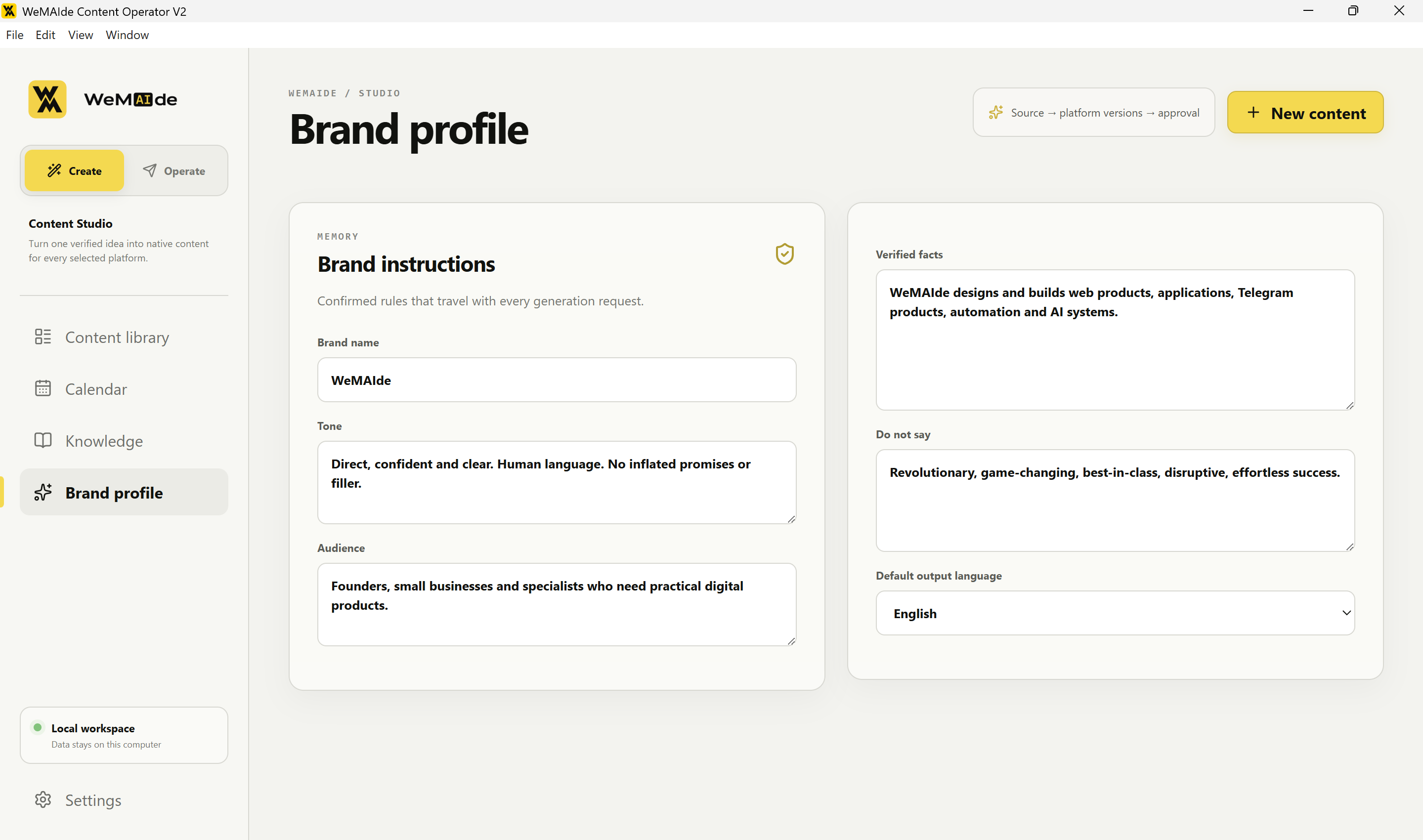
- Identity: who the brand is, who it serves and how it speaks.
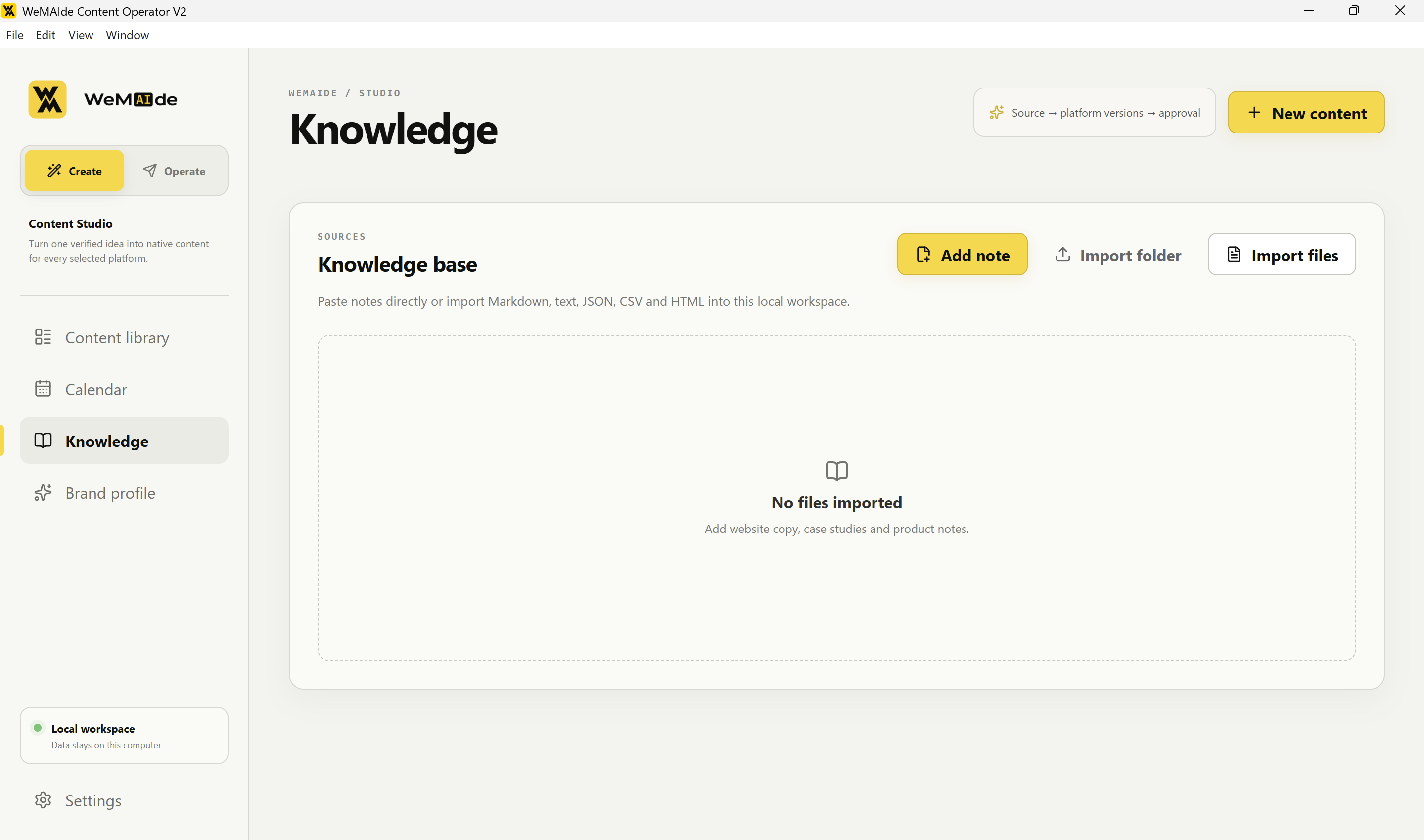
- Evidence: confirmed product facts, project details and source documents.
- Instructions: the goal, format, platform and boundaries for the current piece.
This structure gives the model explicit permission to say less. If a metric is missing, it should not invent one. If a capability is planned, it should be described as planned. If evidence does not support a strong claim, the system should make a narrower claim.
One truth is not one identical post
Consistency is often confused with copying the same text everywhere. A better model is one verified idea adapted into native drafts for each destination. Facts stay stable; delivery changes. Adaptation and factual consistency are different responsibilities, and a content system should support both.
Operational state is part of the truth
Draft, Ready, Scheduled and Published are not cosmetic labels. They answer what happened to a particular version. If the text changes after approval, it should return to review. The source of truth includes the evidence behind a post and its current editorial state.
As generation gets cheaper, value moves upstream toward verified knowledge and downstream toward review, adaptation, timing and accountability. The best content systems will not have the longest prompts. They will know what is true, what changed and what is ready to leave the workspace.