One idea. Six platforms. One controlled content workflow.
Why faster writing is not enough—and how to turn verified brand knowledge into platform-native content without losing control.
Most teams do not have a shortage of ideas. They have a shortage of structure around those ideas. Source material lives in documents, old posts, chats and someone’s memory. A useful topic becomes a LinkedIn draft, then a shorter X post, a conversational Threads version and a longer Telegram update. Soon there is another file called final-v3.
AI makes each individual draft faster. It does not automatically make the operation clearer. That is why we built WeMAIde Content Operator: a Windows application that brings brand context, AI-assisted creation, platform adaptation, review, content states, media and editorial planning into one controlled workspace.
The problem is larger than writing
Before a post is published, someone still has to decide which facts are verified, whether the idea fits the audience, how it should change for each platform, which version was approved and what should go live next. A generic AI chat can improve wording. It does not naturally maintain this operating context.
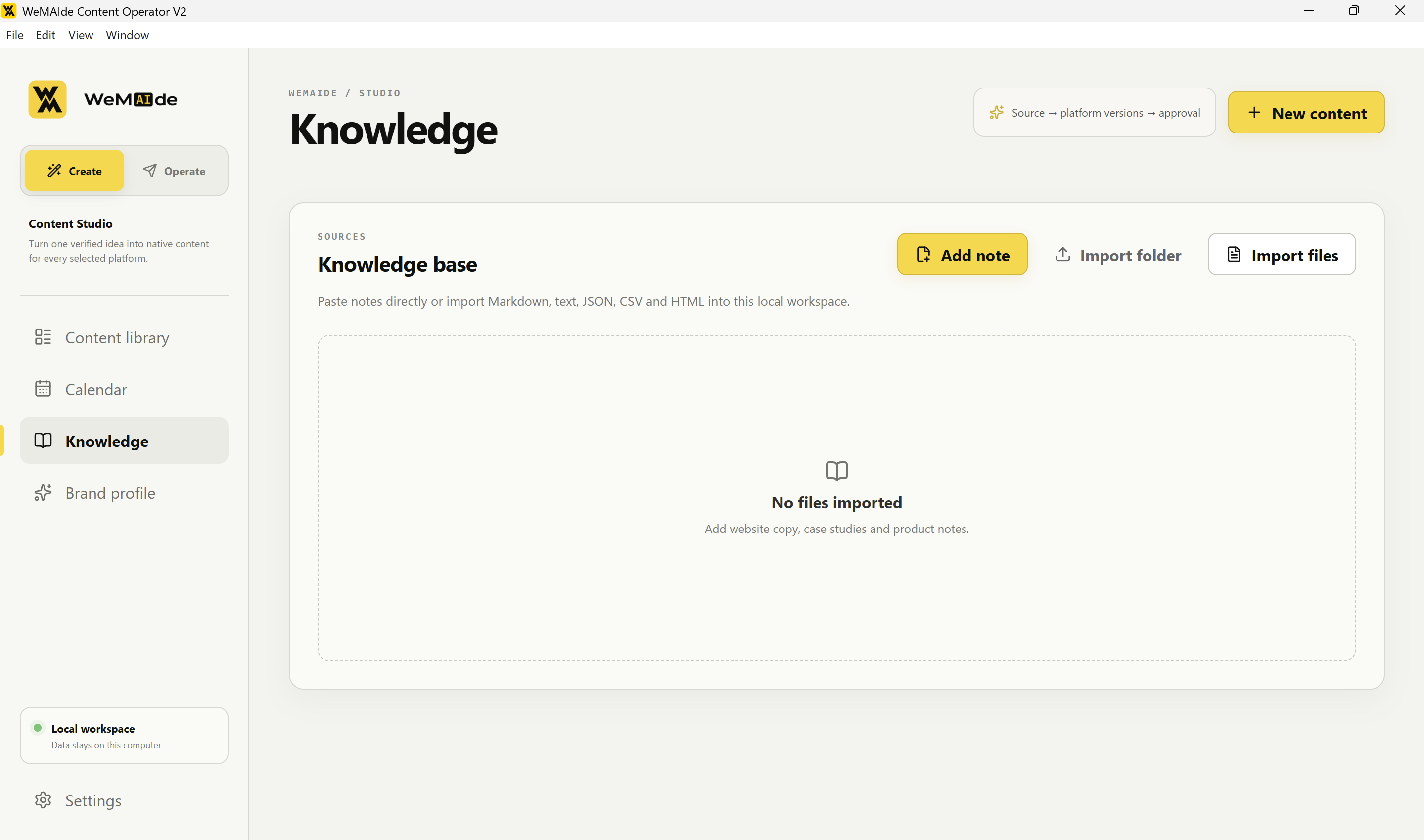
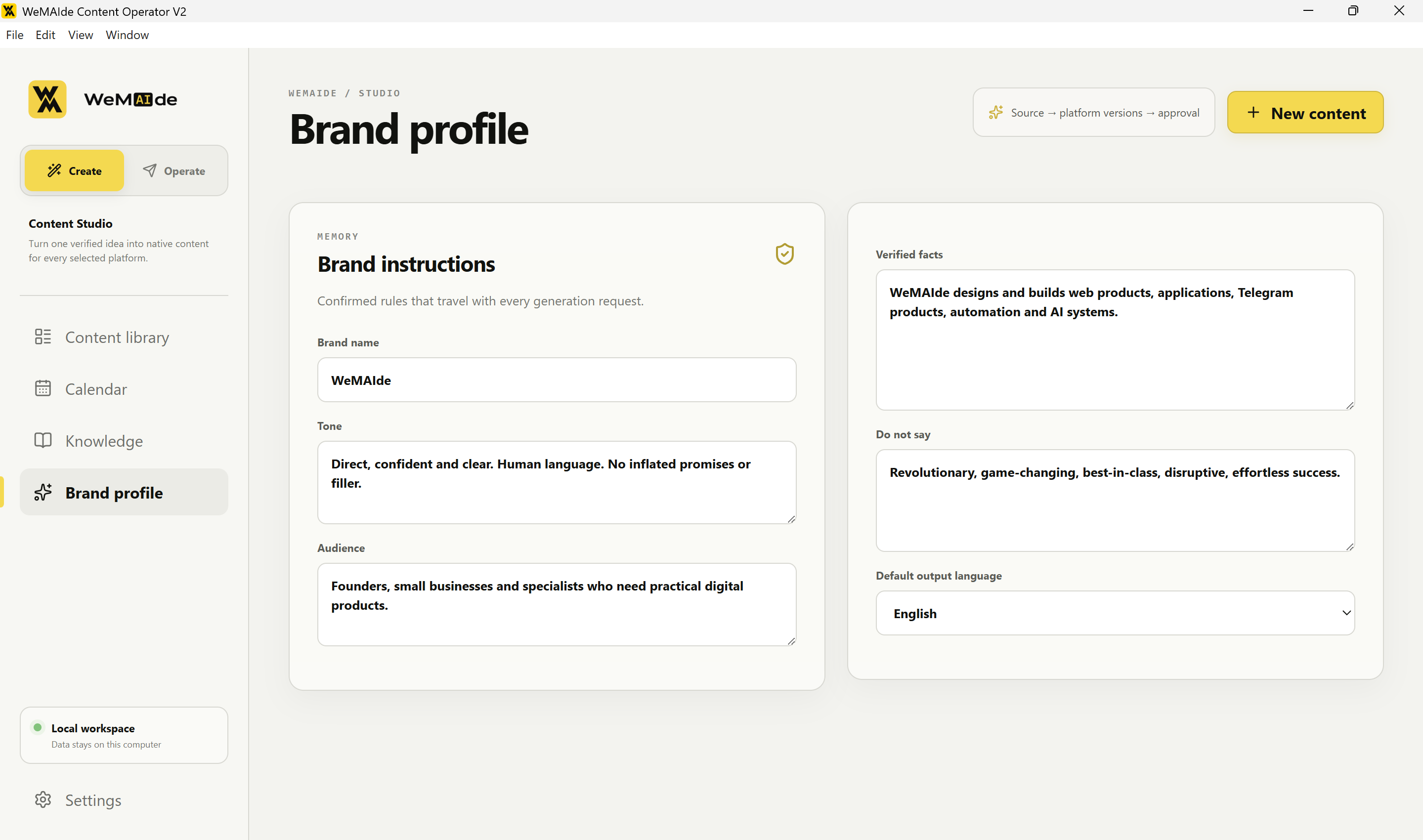
- Brand Profile defines the company, audience, positioning, tone and boundaries.
- Knowledge contains imported local documents with approved product and service information.
- Notes add a new fact or instruction directly, without preparing another file.
The separation is deliberate. Brand direction is not factual evidence, and neither should be buried in a long prompt nobody can audit later. If a metric, client or capability is not verified, the system should not invent it.
One source, six native drafts
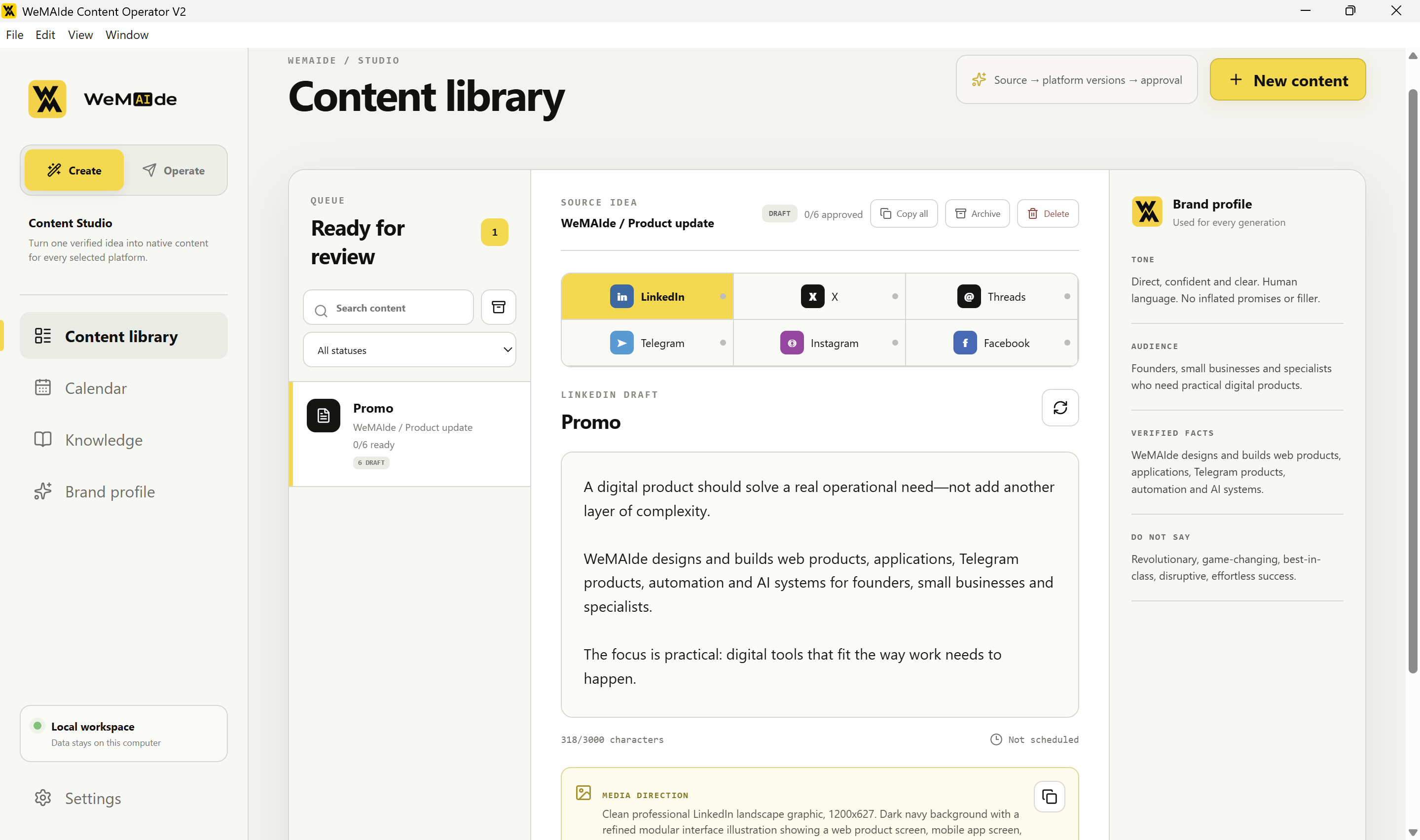
Content Operator prepares separate versions for LinkedIn, X, Threads, Telegram, Instagram and Facebook. It does not treat them as six identical text boxes. The operator can choose the output language, length, call to action, hashtag preference and whether the post needs an image.
A LinkedIn argument can stay detailed. The X version can become sharper. Threads can sound more conversational. Telegram can carry more context. The facts remain stable while the delivery changes.
Approval belongs to a version
Each platform version moves independently through Draft, Ready, Scheduled and Published. If a scheduled draft is edited, it leaves the calendar and returns to review. Approval belongs to the exact text a person checked—not permanently to its title.
Add verified knowledge. Develop one idea. Adapt it for each platform. Review every version. Publish when the result is ready.
The working beta now includes AI text and image generation, a searchable content library, editorial calendar, recoverable archive, local credential storage and explicit publishing to supported official APIs. The goal is not to replace content strategy or human judgment. It is to give both of them a place to operate.