WEMAIDE / INSIGHTS / ENGINEERING
Custom AI software vs off-the-shelf tools: when should you build?
A practical build-versus-buy framework for teams considering a custom AI application, workflow or internal system.
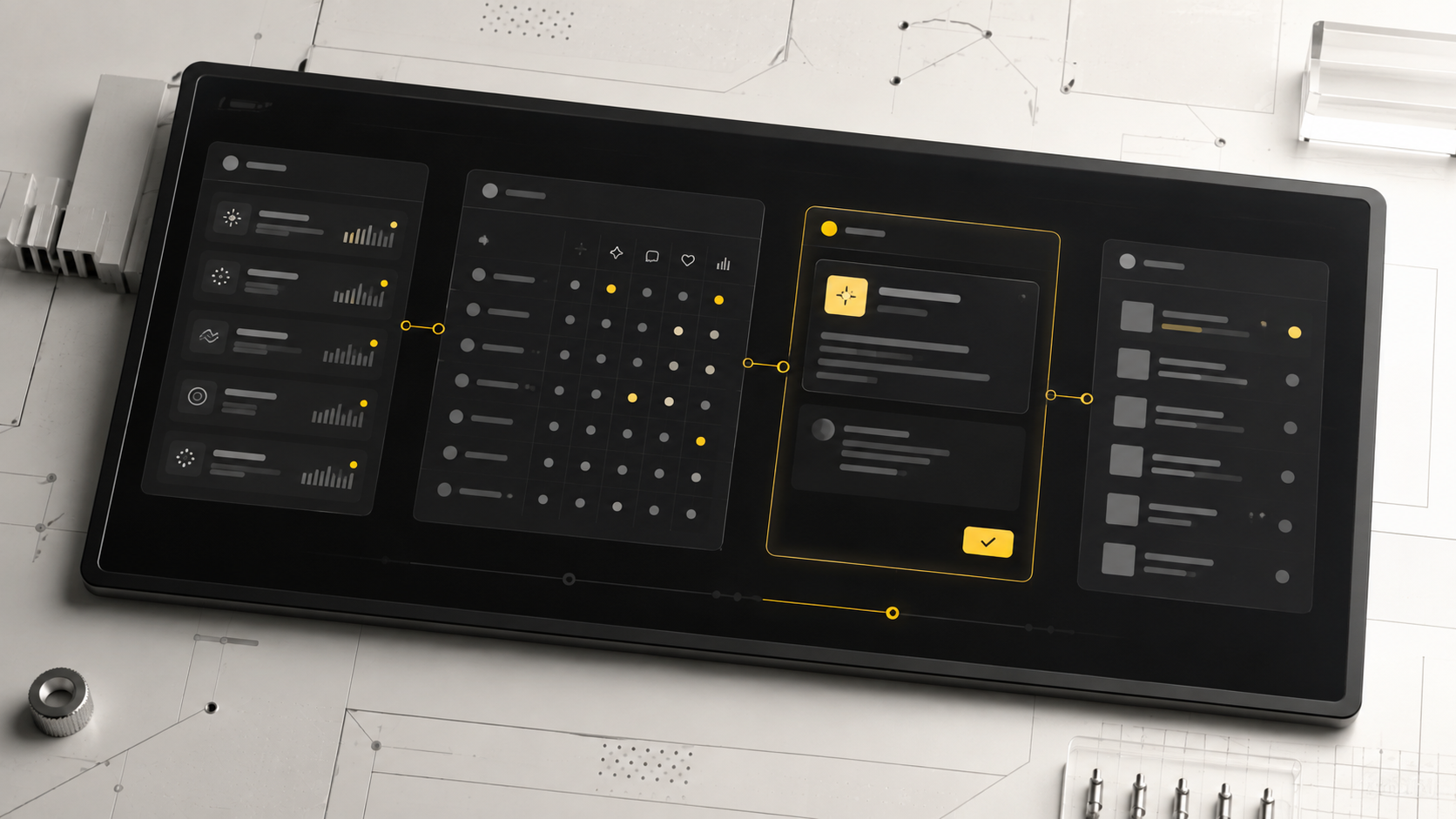
A custom AI system is not automatically better than a subscription product. Existing tools can be the fastest and cheapest way to prove that a workflow matters. Building becomes rational when the workflow itself is specific, repeated and valuable—and when generic software keeps forcing the business to work around it.
The decision should begin with operational friction, not with a model name. Where does information enter? Which judgment is repeated? What evidence is required? Who approves the result? What happens after the AI response? Those questions reveal whether the need is a prompt, an integration or a real product.
Buy when the workflow is standard
- The task is common and existing tools already cover the required integrations.
- The team can adapt its process without losing an important advantage.
- Usage is occasional and manual review is inexpensive.
- The vendor’s data, access and retention model fits the organisation.
- Speed to first use matters more than ownership of the workflow.
A commercial tool also provides updates, support and a known operating model. Rebuilding a mature commodity feature rarely creates value by itself.
Build when the system carries your process
- The AI must use proprietary context, rules or approvals that generic tools cannot represent cleanly.
- The result has to continue into internal systems rather than end as copied text.
- Auditability, local storage, access boundaries or deployment control are material requirements.
- Volume makes repeated subscription and manual coordination costs significant.
- The workflow is part of the product or a defensible operational advantage.
Separate the model from the product
The model is one replaceable component. A durable AI product also needs context preparation, deterministic rules, structured outputs, permissions, failure handling, logging, evaluation and a human interface. Good architecture makes it possible to change a provider or model without rebuilding the organisation’s entire workflow.
business event → trusted context → model task → validation → human or policy gate → system action → evaluationPrototype the risky decision first
A useful prototype does not imitate the final dashboard. It tests the uncertain part: can the available data support the judgment, can quality be measured, and can failure be contained? Evaluation examples should include normal cases, edge cases and inputs where the correct result is to stop or ask for help.
Only after that loop works should the team invest in automation, permissions, deployment and polished interaction. This sequence protects the budget from an attractive interface built around an unreliable core.
Build custom AI software when ownership of the workflow is worth more than the convenience of another generic tool.
For many teams the right answer is hybrid: use established infrastructure for models, payments or messaging, while building the context, decision logic and interface that make the system specific to the business.