A structure built around the visitor
Agree the audience, page purpose and main action before drawing screens. We map pages, navigation, source material and the information a customer needs to decide.
 Start a project ↗
WEBSITES / DESIGN & DEVELOPMENT
We design and build business websites, landing pages and connected web experiences. Start with the question your visitor needs answered, then make the route from that answer to an enquiry, booking request or product clear on a phone and a computer.
OUTCOMEA website your customers can use and your team knows how to maintain.
 WEB
DELIVERABLES
Each engagement is scoped around the smallest complete system that can deliver the intended result.
Agree the audience, page purpose and main action before drawing screens. We map pages, navigation, source material and the information a customer needs to decide.
Layouts, typography, imagery and interactions form one coherent system. A floor selector or a product comparison should still make sense when it becomes a compact list on a phone.
Build the agreed pages and complete journeys, including form validation, confirmation, loading and failure states. CRM, booking, payment or other integrations are scoped only after their access and capabilities are checked.
Check key pages, keyboard navigation, mobile behaviour, metadata, crawlability and the agreed performance targets. Handoff includes the chosen editing workflow, deployment responsibilities and what ongoing support covers.
USE CASES
Good software starts with an operating need. These are common patterns, not fixed packages.
Explain the business, services, evidence and next step without making visitors assemble the offer from disconnected social profiles.
One offer with a complete path from the campaign link to an enquiry or another defined action. Copy, proof, form behaviour and analytics belong in the scope, not just the first screen.
Help people browse, compare and shortlist the right option. A simple catalogue can link to an existing sales process; live stock, checkout or account features are separate integrations.
A room selector, a cost explanation or a comparison can help a customer finish a task. Begin with a small maintained data set before committing to a live inventory system or complex configurator.
PROCESS
One continuous path from product definition to build, validation and launch.
A current brochure, product photo, timetable or customer question is a useful starting point. Define what someone should be able to finish on the website.
Approve the page map, content responsibilities, desktop/mobile direction and acceptance checks. Separate essentials from optional interactions and later releases.
Review real content on representative pages, then build the remaining patterns. Confirm integration behaviour and the way your team will update information.
Test the agreed journeys, release the site and confirm the live result. Identify who owns hosting, domains, content updates, measurement and maintenance.
RELATED WORK
The studio website and WM AVTO are working products. The ten business website examples are explicitly labelled design concepts, not ten shipped client sites.
Brand, responsive layouts, multilingual pages and a reusable publishing structure developed as a working studio product.
View case ↗02Working web productA vehicle-report experience connecting user input, data, report states and next actions. Its application scope is distinct from a brochure website.
View case ↗03Original design studyDesktop and mobile concepts for ten businesses, with three small sample-data selectors you can try.
Explore the concepts ↗FAQ
The agreed scope can include structure, design, development, content preparation, forms, integrations, launch checks and handoff. We list what is included and what the client supplies before estimating. A catalogue, a booking request and a live booking system are different scopes.
At WeMAIde, landing pages start at $800 and company websites at $1,500, before tax. You can pay for actual development time at around $20 per hour or agree on a fixed price for a defined scope. The cost guide explains the assumptions; hosting, third-party subscriptions and maintenance are estimated separately.
Yes. We define one offer, its audience and the action a visitor should complete. The scope covers the whole journey, including the mobile form and confirmation, rather than only a desktop visual.
We agree which content changes, who edits it and how often. That determines whether a CMS, a structured content workflow or developer-maintained pages are suitable. Editor setup, training and permissions must be explicit in the scope.
When the existing system offers an appropriate integration path, we can scope that connection. We first confirm the data, permissions, limits and failure behaviour. A link to a booking service is different from synchronising availability inside the website.
We plan understandable pages, crawlable links, page titles, descriptions, canonical URLs and a sitemap, plus agreed mobile and performance checks. These are foundations for search visibility. They do not guarantee rankings, traffic or ongoing content promotion.
Yes. Start with the current URL and the task that is not working. A focused improvement may be enough; a broader redesign is a separate scope with existing content, URLs and integrations to protect.
RELATED INSIGHTS
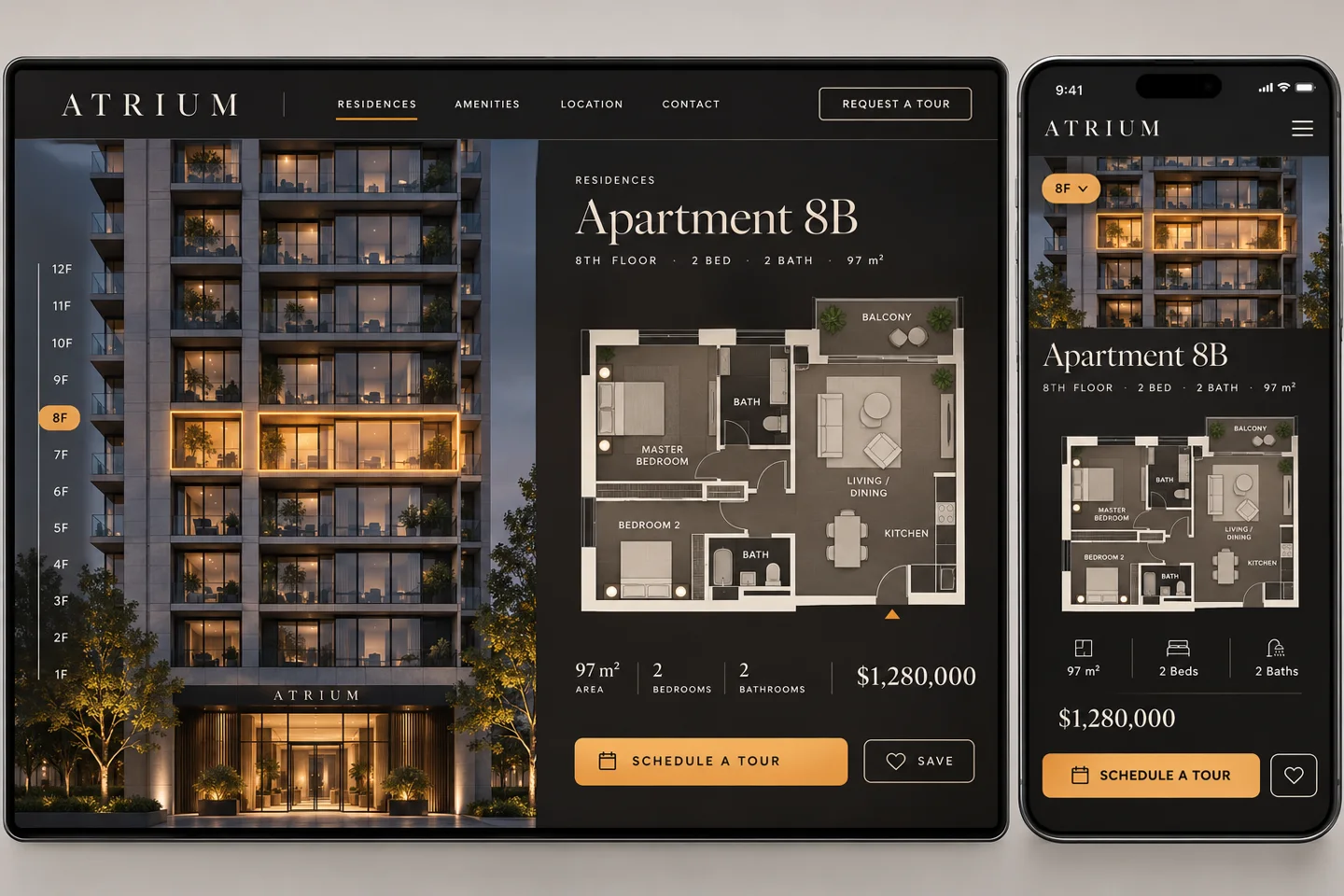
Pick a flat by its windows, a class by the cup you’ll make or a hotel room by its morning light. Ten original WeMAIde website concepts, with desktop and mobile layouts and a practical first release for each.
Read insight ↗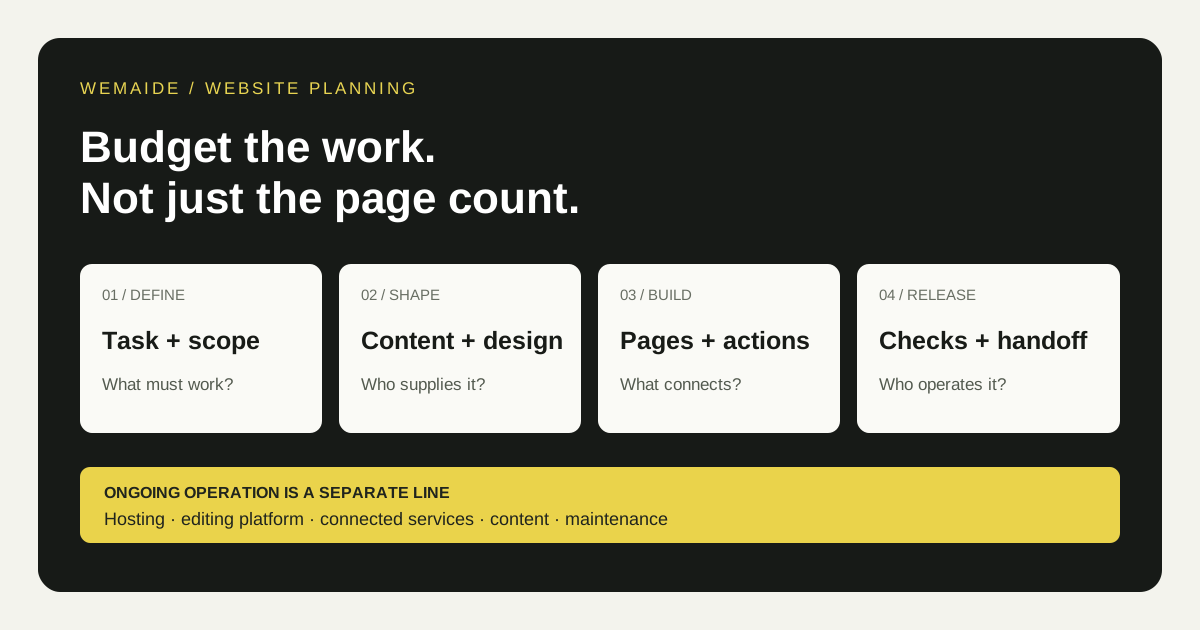
WeMAIde landing pages start at $800, business websites at $1,500 and focused redesigns at $1,200. Compare hourly development with a fixed price for an agreed scope.
Read insight ↗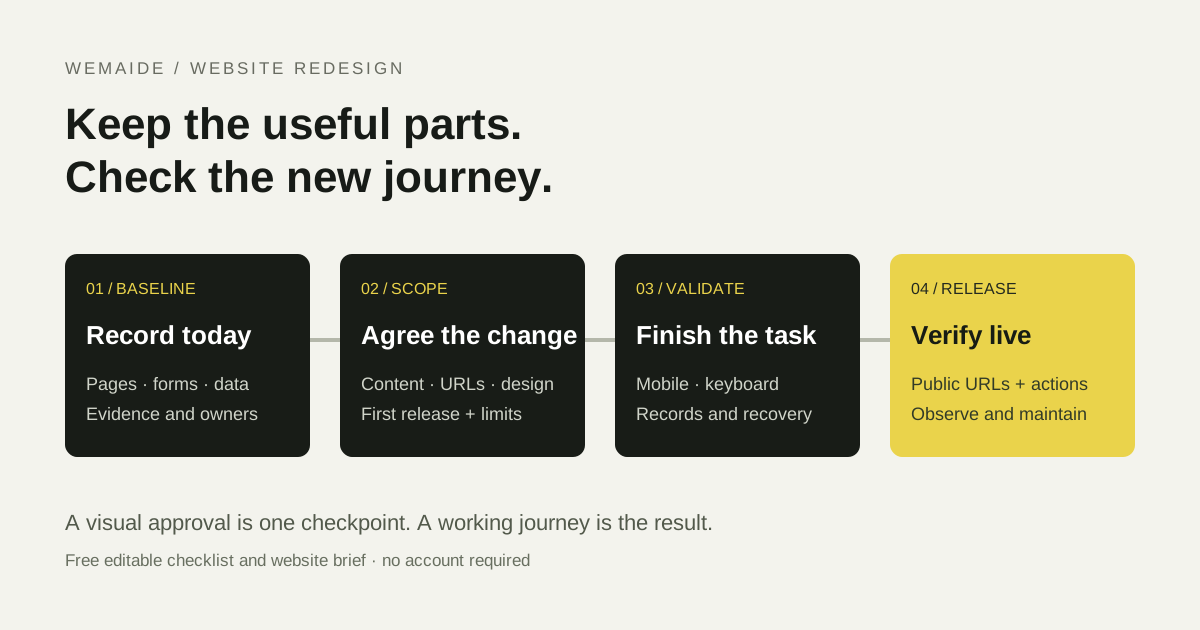
A practical website redesign checklist for content, URLs, mobile layouts, forms, performance, launch and recovery. Download an editable checklist and project brief.
Read insight ↗START A PROJECT
Tell us what needs to work. We will come back with the clearest next step.
Discuss it in Telegram ↗